Retail Sample Board Displays That Encourage Customer Interaction
In this article:
You don’t want potential customers to merely see your retail sample board display; you want them to interact with it. The more they interact with the display, the more likely they are to make a purchase.
Think no one shops in retail stores anymore? Think again. According to the National Retail Federation, roughly 70% of total sales can be attributed to brick-and-mortar stores. Because these hands-on custom displays help customers evaluate the products before purchasing, they are a powerful ally in your marketing efforts.
In this blog, we’ll examine the many ways these retail sample board displays can encourage customer interaction and how this works to your benefit.
At McIntyre Displays, we do more than merely bring your vision to life. We treat your project with the same care and dedication that we would want for our own ventures. Since our humble beginnings in 1977, we have continually demonstrated a reputation for excellence and stellar customer service that have earned us many loyal customers. We invite you to discover how we can do the same for you. Let’s get started.
What Is a Sample Board Display?
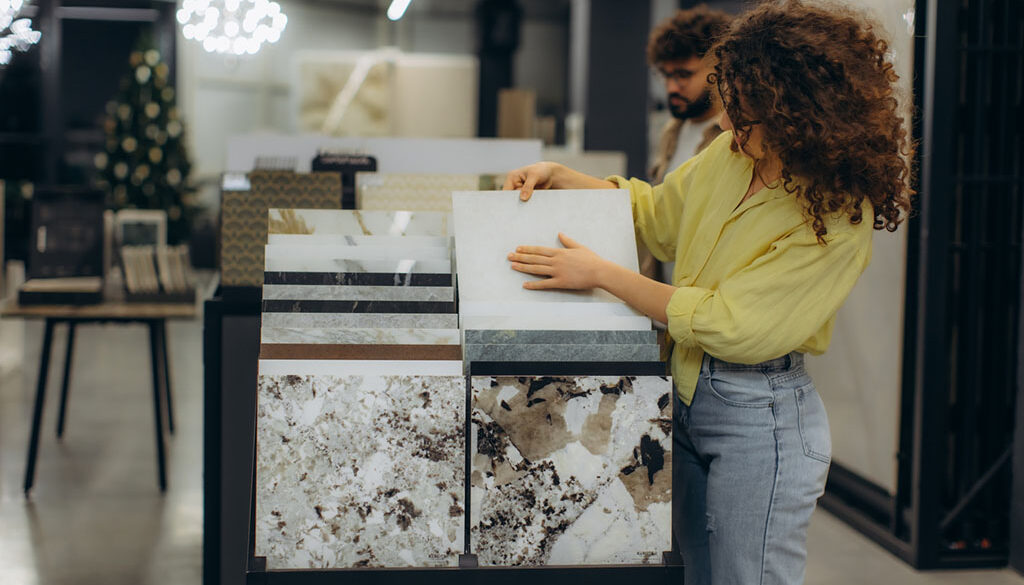
Let’s say you want to renovate your bathroom. You’d like to incorporate new tiles. You’ll likely come across a display with sample tiles you can touch and feel. This lets you get a closer, more hands-on sense of what you’re considering. It also makes it simpler to compare and contrast items from different businesses.
These displays are also very useful tools at trade shows, showrooms and store floors.
Retail sample board displays are also utilized as “mood boards,” making them a great way to present samples of fabrics, paint and finishes to potential customers and clients.
Why Are Sample Boards Used in Retail?
There are several reasons these retail sample boards are used. Some of them include:
- It reduces guesswork (clients can easily evaluate their options in person rather than guessing from an online photo)
- It gives customers what they desire. In fact, most customers want to experience products in person before purchasing.
- It supports decision-making because customers believe touching is helpful in pushing them toward the final choice to purchase something.
- It increases engagement, encouraging shoppers to spend more time with your product or in your store.
- It creates better recall; shoppers are more likely to remember your product and your brand.
- It reduces the number of returns. When customers can see the texture, color and finish in person, they are less likely to return them (unlike when items don’t look like they did online).
What Products Are Shown in Sample Board Displays?
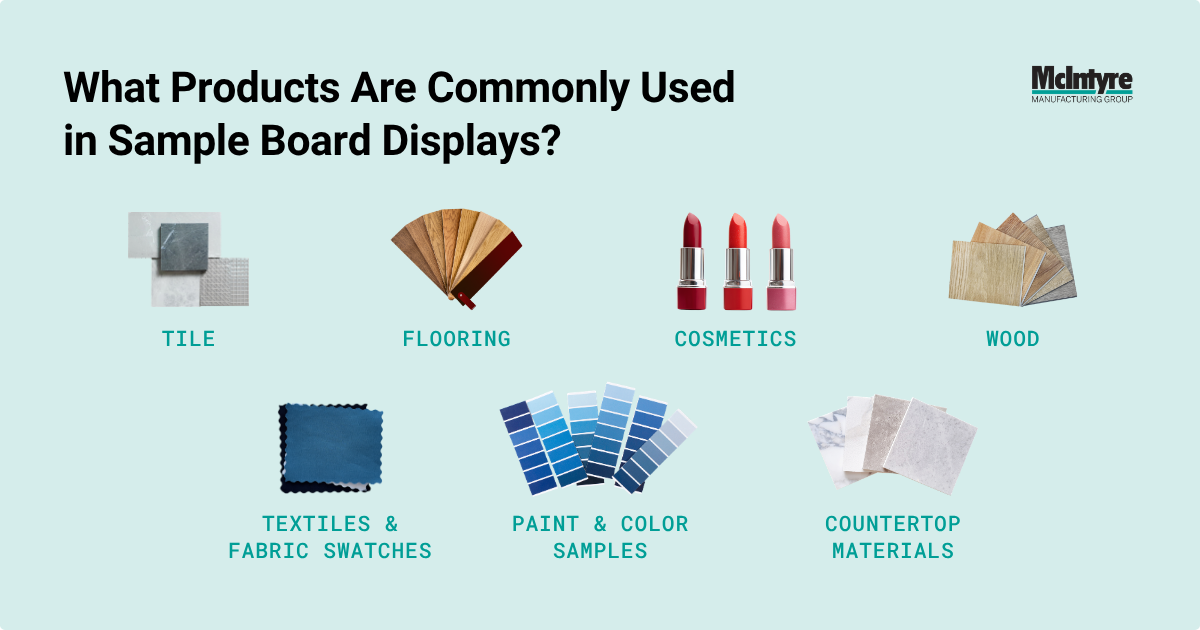
Some of the most common products used in sample board displays include:
- Tile
- Flooring
- Paint and color samples
- Wood
- Textiles and fabric swatches
- Cosmetics
- Countertop materials
What Are the Benefits of Product Sample Boards?
There are many advantages of product sample boards. We’ve touched on a few of these before, but to recap, we’ve listed some of them below:
- Customers are more confident in their purchases.
- There is higher engagement with the product.
- There are fewer complaints.
- Customers are less likely to return the product.
- It offers more efficient comparison shopping.
Want a Retail Sample Board Display That Truly Grabs Attention? Let McIntyre Displays Get You Noticed
We have a deep understanding of what success looks like and how to achieve it. It’s something we’ve been doing since our inception, and our awards and loyal customers back it up. Our designers have both creative vision and engineering expertise to bring your project to life.
We would love to hear about your latest project and how we can help you achieve success. Let’s get started.
Key Takeaways
- Interactive sample board displays increase the likelihood of purchase by letting customers physically engage with products before buying.
- Roughly 70% of total retail sales still occur in brick-and-mortar stores, underscoring the continued value of in-person, hands-on displays.
- Sample boards reduce guesswork and returns by letting customers see and feel actual texture, color, and finish rather than relying on online photos.
- Common materials featured on sample boards include tile, flooring, paint, wood, textiles, cosmetics, and countertop materials.
- Sample boards boost customer confidence, engagement, and brand recall while reducing complaints and returns.
- McIntyre Displays, founded in 1977, positions itself as an experienced partner for creating custom, attention-grabbing sample board displays.
=====
Sources:
National Retail Federation, “NRF Forecasts 2023 Retail Sales to Grow Between 4% and 6%,”
https://nrf.com/media-center/press-releases/nrf-forecasts-2023-retail-sales-grow-between-4-and-6