Our Guide to the Role of Secondary Packaging in Damage-Free Shipping
In this article:
If you have a rollout or deadline, you understand firsthand the pressure and stress that arise when your product arrives damaged or even broken. When you work with McIntyre, you’ll find that our worry-free delivery is supported by the role of secondary packaging so you can rest assured your items will arrive exactly as you ordered them, without any issues.
Often, the issue is not with the product itself, but what happens during transit. This is why the role of secondary packaging is critical for helping ensure damage-free shipping. We’ll take a closer look at this type of packaging, its role in delivery, as well as the benefits of working directly with McIntyre for a smooth process that instills confidence.
What Is Secondary Packaging?
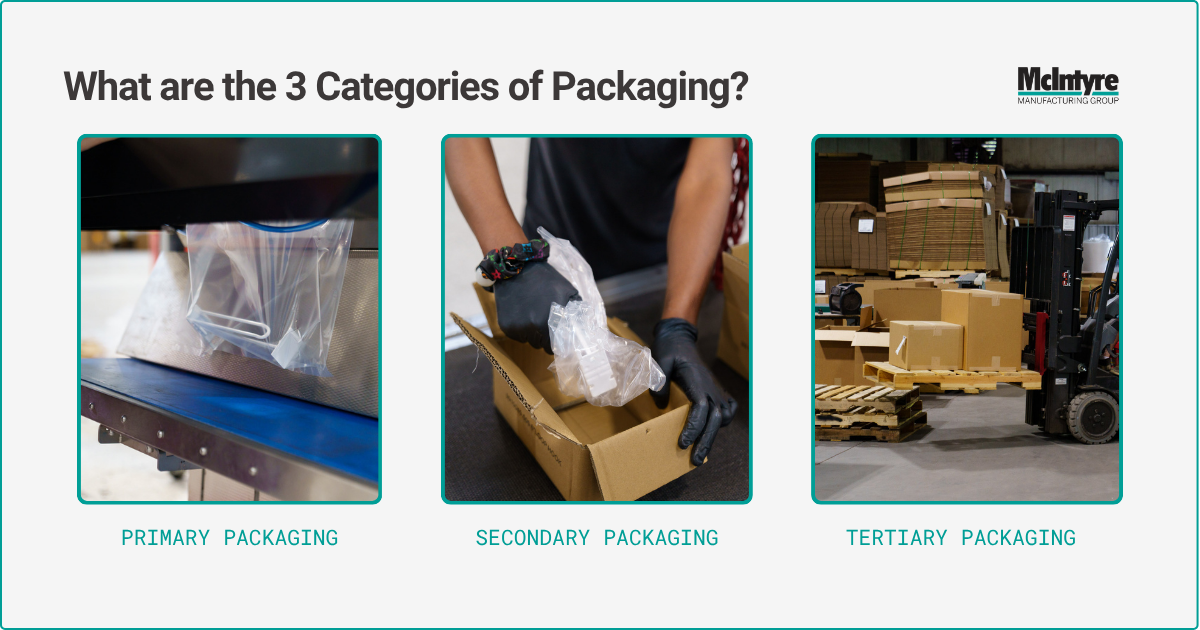
There are three categories of packaging: primary, secondary and tertiary. Secondary packaging is the layer that groups many primary packages together. This provides protection during transit, handling and storage.
Primary Packaging
This is the first layer that comes in contact with the product. Not only does it protect the product, but it also provides an eye-catching display to encourage shoppers to purchase it. Some examples of primary packaging may include:
- Bottles and cans for liquid products such as sodas
- Blister packs that are used for small electronics or pills
- Tubes that are commonly used for toothpaste, creams and cosmetics
- Wrappers for snacks and candy
Secondary Packaging
We defined this earlier, but examples of the role of secondary packaging may include:
- Cardboard boxes
- Shrink wrap
- Display products
The key difference is that while primary packaging affects individual objects, secondary packaging groups multiple primary packages together, providing an additional layer of protection.
Tertiary Packaging
Tertiary packaging is used in bulk storage and includes:
- Pallets
- Stretch wrap
- Drums
- Crates
The Role of Secondary Packaging in Shipping
Secondary packaging is needed for:
- Fragile products
- Products that will be handled multiple times before reaching their destination
- Shipping multiple units together
- Products going to a retail environment
What Are the Benefits of Secondary Packaging?
The benefits of secondary packaging include:
- Fewer damaged goods
- Lower return costs
- Lower replacement costs
- Easier handling
- Faster processing
- Shipping flexibility
What Are Examples of Secondary Packaging?
Some common examples of secondary packaging include:
- Corrugated boxes and cases
- Shrink wrap
- Display boxes
- Retail-ready cases
- Foam inserts
- Clustered trays
All of these can keep smaller items together and protect them in transit.
McIntyre: Your Partner When You Need a Strong Role of Secondary Packaging
It doesn’t matter if you have the best product in the world if it arrives at its destination damaged or broken. It doesn’t just impact your brand, but it also impacts your bottom line. Rework and replacement can quickly become an expense, and a headache, you don’t need.
When you work with McIntyre, you have a partner in your corner that has a reliable track record of providing stellar service every time and helping ensure items arrive without damage. We’d love to hear about your project. Let’s get started.
Key Takeaways
- Secondary packaging groups primary packages together to protect products during transit, handling, and storage.
- There are three packaging categories — primary, secondary, and tertiary — each serving a distinct purpose.
- Secondary packaging is especially important for fragile items, multi-handled shipments, bulk units, and retail-bound products.
- Using proper secondary packaging reduces damaged goods, returns, and replacement costs while speeding up processing.
- Common secondary packaging examples include corrugated boxes, shrink wrap, display boxes, and foam inserts.
- McIntyre positions itself as a reliable partner for damage-free delivery through strong secondary packaging practices.
=====
Sources:
National Motor Freight Traffic Association, “Types of Packaging: Primary, Secondary & Tertiary,” https://nmfta.org/resource/types-of-packaging-primary-secondary-tertiary/