Innovative Trends in Custom Retail Displays
Updated December 2025
In this article:
When it comes to your business, you likely track every trend, helping ensure that you get every possible edge on the competition. Every strategy is carefully calculated, and business forecasting helps ensure that you’re prepared for any situation.
But do you give that same consideration to your retail display?
If you’re using a display that is out-of-date or one that doesn’t reflect current trends, then your marketing will fail to accurately reflect the benefits of your product. Even worse, it could cause others to think that your business is stuck in the past, and therefore, irrelevant.
Current innovations and styles are not fads; they are a reflection of the changing habits of the American consumer. Taking advantage of this customer psychology with custom point of purchase displays gives you an advantage over the competition.
At McIntyre Displays, we stay on top of the most effective, creative developments in POP displays so we can give you the expertise you need. From implementing the power of technology to harnessing the best practices in graphic design, we can see your project from inception to completion and deliver—which saves you the headache of working with multiple vendors. Interested in discovering how we can elevate your brand and help your latest rollout succeed? Contact us to get started.
In this blog, we’ll take a closer look at some of the most innovative trends and developments in custom retail displays. We’ll examine the role of effective lighting, technology and consumer psychology, including how they all work seamlessly to turn shoppers into customers.
Important Innovative Trends to Remember for Custom Retail Displays
Forget About Traditionally “Selling” Products…Now It’s About Selling the Experience
Stores are much more likely to provide sampling services, makeovers or areas where you can “test drive” new technology or tools. Why? Because retailers have realized that making an emotional impact on the customer is more likely to result in a purchase.
Think of it this way: Are you more likely to purchase a power tool that is tucked neatly behind a display case or one that you can hold and explore how it operates?
What does this mean for your custom retail display?
This means you must be sure your display is in perfect sync with the story and encourages the customer to engage with the product while, at the same time, keeping the product secure.
Be Prepared to Work Hand-in-Hand With Technology
It’s no secret that consumers are well-versed in online shopping. However, there are still some things that consumers prefer to see in person, such as clothes, technology or tools. Retailers are now offering apps to help customers interact with them both on Facebook and other sites. Artificial intelligence can track shoppers’ patterns to help businesses strategically place their displays in the areas with the most optimum foot traffic.
What does that mean for your custom point-of-purchase displays?
It means it’s even more important to provide a clear message. Often, this means informing consumers about these new apps and perhaps even showing step-by-step instructions on how to use them.
POP Displays Will Involve Many “Self-Serve” Options.
Your latest display may need to incorporate a self-serve kiosk. These high-tech kiosks take the headache out of returning a product and are likely to become even more popular in the future.
What does this mean for your custom retail displays?
This means that your POP display must easily incorporate these new innovations. Anything that streamlines the customer experience to make shopping easier and more efficient will benefit your brand story.
McIntyre Displays: A Leader for More than Four Decades
What’s the secret to remaining an industry leader for more than forty years? We think it’s actually a very simple formula: offer the best product with stellar customer service that is better than any other in the industry. Our creative engineers can also help you pinpoint areas where you can save money.
Do you have a solid vision or maybe just the vague hint of an idea? Either way, we can help that vision transform into custom retail displays that help your bottom line and provide the best return on your investment (ROI). Just simply contact us to get started.
We briefly touched base earlier on how technology can make your custom retail display stand out, providing an effective marketing solution. Next, we’ll explore this facet in greater detail.
Using Technology in POP Displays Gives Shoppers the Experience They Crave
The standard, one-dimensional display simply isn’t going to cut it in today’s marketplace.
The retail landscape is becoming more and more competitive. Despite what the alarmists have said, online shopping has not brought about the end of brick-and-mortar stores.
But a transformation has occurred.
More consumers are demanding a shopping experience, seeking ambiance and interaction.
When roughly 70 percent of purchases happen in the store, it’s easy to see the importance of the POP display. Static signs aren’t enough to get the job done. Technologically advanced retail displays are needed to remain competitive.
High-tech Elements for Custom-Designed Retail Displays
Built-In Digital Signage
When combined with sophisticated computer software, the power of digital signage can open up a world of new possibilities. According to Shopify, 68 percent of customers stated that digital signage would make them more likely to buy the products advertised.
But perhaps even more interesting is that 44 percent said it would cause them to buy the advertised product instead of the one they had planned to purchase!
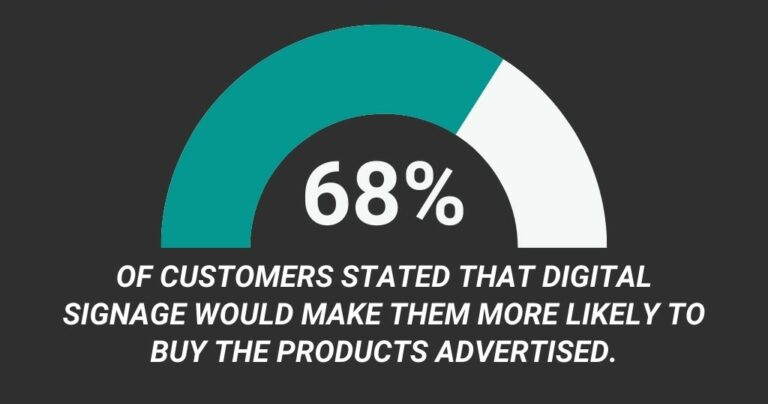
Digital signage can make a huge difference, but it’s important to implement it in a way that is inviting and complementary to your retail environment and the “feel” of your store.
If you aren’t using digital signage, there’s a good chance your competition is—digital signage installations have grown almost 40 percent each year. Most of these are purchased by members of the retail industry, which comprises 25 percent of sales.
Artificial Intelligence for Personalization
Artificial intelligence (AI) is becoming a key player in the retail landscape, and more custom retail displays are taking advantage of it.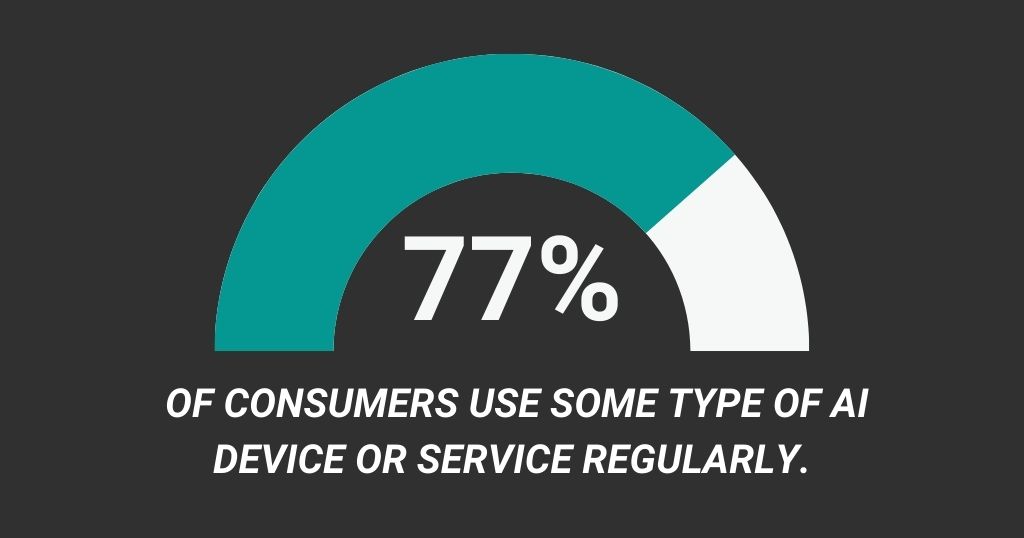
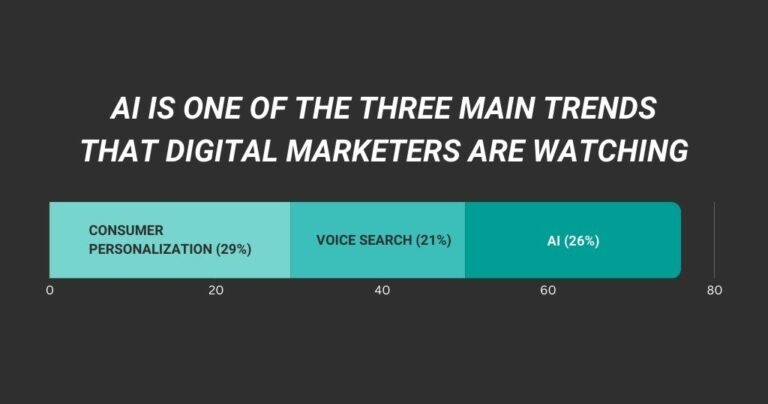
AI has inundated our lives, and roughly 77 percent of consumers use some type of AI device or service regularly. It’s also one of the three main trends that digital marketers are watching.
The trends are consumer personalization (28.6 percent), voice search (21.23 percent), and AI (25.6 percent), according to Shopify.
One way to implement the power of AI is by using a high-definition screen coupled with a program that can recognize shoppers and greet them by name, perfect for a display used in conjunction with a membership or private club.
Through AI, the customer will be shown items that they might be interested in based on previous shopping habits.
An example of this seamless shopping experience was recounted in Vogue: Business online magazine where shoppers at a Hong Kong store could either sign in using a membership code or a facial scan.
AI then assessed the shopper’s taste in clothes based on what they are wearing and utilized interactive retail displays to provide recommendations.
AI for Real-Time Answers to Customer Questions
Does your display utilize the ability to answer a customer’s questions while he or she is at your display?
By doing so, whether through an online chat or access to a frequently asked questions format, your customer spends more time at your display, building your brand and increasing the likelihood that your product will get purchased.
What About Technology to Attract Millennials & Gen Z at Retail?
Your biggest customer base is on the horizon, and if you’re not implementing the best digital marketing strategies, you’re going to miss a lucrative opportunity.
Millennials and Gen Z are generations that are not only digitally driven, but they also enjoy brick-and-mortar stores.
Therefore, unless you’re implementing solid digital marketing strategies in conjunction with your stellar retail display, you could be losing revenue from these powerful consumers.
Millennials are defined as those born between 1981 and 1996, and Gen Z is the generation that follows the Millennials, born anywhere from 1997 onward.
Forbes stated that the Gen Z generation wields $44 billion in purchasing power, and their population will soon outnumber Millennials.
The sheer numbers are staggering—which is why it’s even more important to know and understand their purchasing habits.
Trend: Physical Stores are Still Popular among Millennials and Gen Z
While many feared online shopping marked the end of brick-and-mortar stores, just the opposite seems to be the case.
While many Millennials and Gen Zers will research a product online, many surveyed said they would prefer to buy it in the store.
It’s also vital to realize that while these generations prefer the in-store experience, they do their product research online. To reach them, you’ve got to implement a digital marketing strategy in addition to your retail POP displays.
Tips for Utilizing Technology in the Retail Environment
1. Use social media to leverage the power of your POP display
Too often, businesses don’t know how to capitalize on social media in a point-of-purchase display. It’s the perfect opportunity to let your audience engage with your brand and give them a chance to psychologically invest in your brand story.
2. Use digital displays to create an experience
Frequently used to enhance the customer’s in-store experience, digital units in a display could look like:
- Motion sensors that play a video or provide information when someone walks by
- Videos that play on cue
- Touch screens that invite potential clients to explore your product and sign up for your newsletter for certain discounts or special promotions
- A secure console to play video games or virtually “test drive” an electronic product
All of these encourage interaction, which enables potential customers to emotionally connect with your product.
3. Make sure customers can find your stores
Suppose a customer looks you up online and does all their product research. They’ve made their decision and are ready to make a purchase. You’ve coordinated the colors and online specials with your in-store display.
…but does the customer know where your retail store is?
You need to work with your web developer and digital marketing team to ensure that your store locator is accurate and easy to use. Since most searches are done on mobile phones and tablets, it’s important to be sure it’s easy to use on these devices.
If your customer can’t find you easily, it doesn’t matter how powerful your digital display is.
If you’re displaying your product inside a store, make sure that the marketing team for this retailer has updated the Google My Business listing for the business.
We Understand Your Retail Display is Part of a Larger Picture
We’re known for exceeding our customers’ expectations. With the experience we have combined with our “approved supplier” status at major retailers, we know what it takes. From design to distribution, we are your single, end-to-end partner. Let us take it from here.
In this article, we’ve discussed innovative trends in custom retail displays, touching on facets such as AI, digital displays and complementing your display with social media marketing.
Next, we’ll take a look at something a bit more simple, but still powerful: The impact of LED lighting.
How LED Lighting Can Enhance Your Display…and Your Bottom Line
Are you using all the tools at your disposal to ensure your POP display puts its best foot forward? It’s not enough to have an innovative, imaginative product—you have to showcase it in a way that enhances your brand. LED lighting provides a wonderful, eye-catching opportunity to draw foot traffic and increase sales.
Why Should I Use LED lighting?
LED has transformed lighting in the United States by providing extensive energy savings. Compared to incandescent lighting, residential LEDs use 75% less energy and last 25 times longer. As a result, they’ve become the “go-to” lighting for in parking garages, walkways, street lights and other areas.
What are the advantages of LED lighting?
LED lights offer other advantages:
- They’re directional lights, so you’ll rarely need a diffuser to target illumination.
- They produce very little heat, as compared to incandescent bulbs, which generally release 90% of their energy as heat.
- They’re extremely durable.
- They operate well in extremely hot or extremely cold environments.
- You can turn them on and off several times without affecting their performance.
Is LED Lighting a Good Choice for Your Display?
We’ve outlined some of the things that make LED lighting more efficient and environmentally responsible, but what does this mean for your display? Quite simply, LED lighting increases sales.
LED lighting improves your bottom line
Directional lighting creates a “path” for your customers’ eyes to follow, leading them to the product you’re promoting.
It can provide beautiful subtleties.
Creating the perfect display is both an art and a science. LED lights provide a great blend of colors that make displays “pop” without being garish. This makes it easier to create the intangible “feel” that enforces your brand story.
Remember, harsh lighting drives customers away (and may literally cause headaches for some of them)! LED lighting perfectly combines visibility with a softer, enticing glow.
They keep overhead costs low.
The efficiency and durability of LED lights means you’ll spend less time replacing them and more time utilizing them.
They can be easily integrated into your display.
LED lighting doesn’t have to be an extensive production. It’s easier than you think to utilize its benefits.
Adjustments are easy
Lights can be programmed to come on when someone passes the display. LED rope or tape easily captures customers’ attention. For example, these lights can be used to frame a sign, trim a banner, or outline a shelf.
How to Use LED Lighting Effectively
Of course, just because you can use something doesn’t necessarily mean that you should. LED lighting is an excellent choice to enhance any display, but it has to be used effectively. Poor lighting is actually worse than not using any at all. Be sure:
- Lighting enhances—not detracts—from the product.
- The lighting guides the customers’ eyes where you want them to look.
- You are wary of trends. What may be the latest look this year may be dated by next. Perfectly highlighting your product will always be in style.
McIntyre Displays Can Help You FInd the Right Lighting for Your Display
Promoting your products is the center of your role—and you often don’t have time to do extensive artistic design and production yourself. Fortunately, we have the creative designers, sophisticated technology and manufacturing capabilities to make it all happen. If you can dream it, we can create it. Contact us to get started.
Since 1977, McIntyre Displays has created custom-designed displays with an uncompromised dedication to customer service. We utilize the latest technology and attention to detail to create the finest products with excellent craftsmanship. If you can dream it, we can create it. Contact us to see how we can bring your vision to life.
Key Takeaways:
- Tracking retail display trends is just as important as monitoring business trends when it comes to staying competitive.
- Outdated displays can misrepresent your brand and make your business appear irrelevant.
- Modern POP displays leverage current consumer psychology to strengthen marketing impact and increase conversions.
- Technology—including apps, digital signage, and AI—is now essential for creating interactive, effective displays.
- Retail displays must support hands-on customer engagement to help “sell the experience,” not just the product.
- Integrating technology effectively requires clear messaging and seamless user guidance within the display.
- Self-serve kiosks and automated features are becoming increasingly important in POP display design.
- McIntyre Displays offers end-to-end expertise for conceptualizing, designing, and producing modern displays.
- Millennials and Gen Z expect both digital engagement and quality in-store experiences, making hybrid strategies essential.
- Social media and digital tools can significantly amplify the reach and effectiveness of POP displays.
- Digital displays and interactive elements help create immersive shopping experiences that encourage customer connection.
- LED lighting enhances product visibility, reinforces brand atmosphere, and can directly increase sales.
- LED technology is energy-efficient, durable, cost-effective, and easy to integrate into retail displays.
- Lighting must be used intentionally to guide the shopper’s eye and avoid distracting from the product.
McIntyre Displays provides the creative and technical expertise needed to produce high-impact, technology-driven displays.
———
Sources:
Digital Trends, “See how that couch would look in your living room in AR with Ikea Place,” digitaltrends.com/home/ikea-place-ar/
Forbes, “How Retail Brands Are Bringing Play To The In-Store Experience,” https://www.forbes.com/councils/forbesbusinesscouncil/2025/07/09/how-retail-brands-are-bringing-play-to-the-in-store-experience/
Shopify, “Digital Signage for Retail: Types, Examples and Benefits,” https://www.shopify.com/retail/digital-signage
U.S. Department of Energy, “LED Lighting,” https://www.energy.gov/energysaver/led-lighting